Thread lifting is often described as a minimally invasive alternative to surgical facelift procedures — but one of the most common questions patients ask is simple: does it hurt?
In this article, we’ll explain what thread lifting involves, what level of discomfort you can realistically expect, potential side effects, and answer some quick FAQs to help you decide whether treatment is right for you.
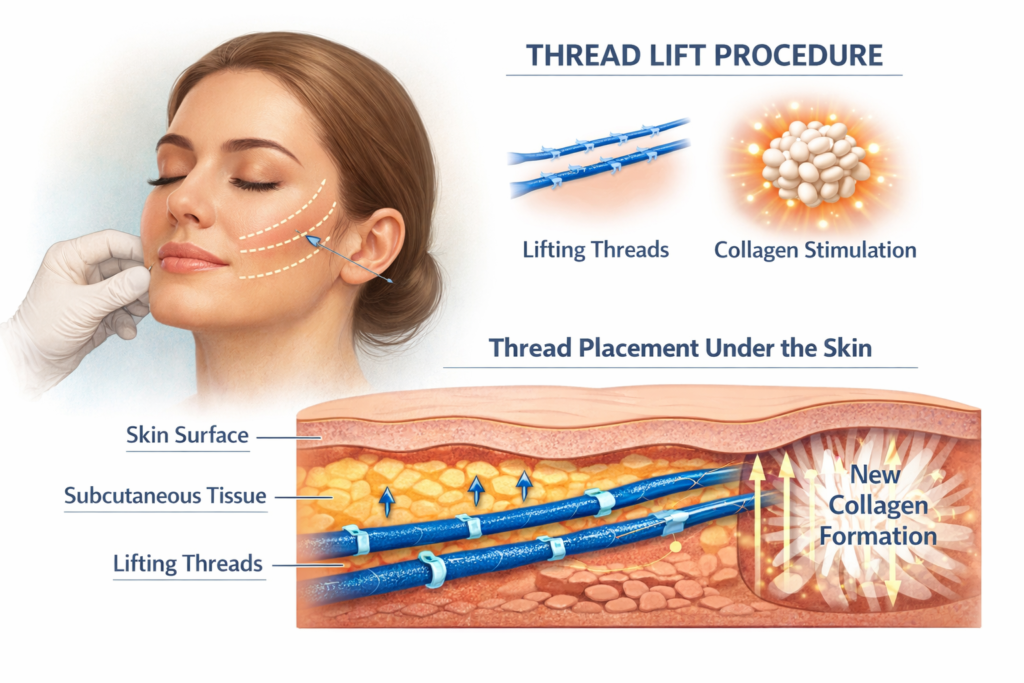
Thread lifting is a non-surgical aesthetic treatment designed to lift, tighten, and rejuvenate the skin using dissolvable threads placed beneath the surface of the skin.
These medical-grade threads are carefully inserted into targeted areas such as the jawline, cheeks, mid-face, or neck. Once in place, they provide an immediate lifting effect while also stimulating the body’s natural collagen production over time.
Because thread lifting does not involve incisions or general anaesthetic, it is considered a minimally invasive procedure with significantly less downtime than surgical alternatives.
The short answer: most patients find thread lifting very tolerable.
Before the procedure begins, a local anaesthetic is applied to numb the treatment area. This greatly reduces discomfort during thread insertion. While you may feel sensations of pressure, pulling, or mild tightness, sharp pain is uncommon.
Patients often describe the experience as uncomfortable rather than painful. The most noticeable sensations tend to occur as the threads are positioned and adjusted, but these typically last only a few moments.
Pain thresholds vary from person to person, but overall, thread lifting is widely regarded as a low-pain aesthetic treatment.
After your thread lift, it’s normal to experience mild tenderness, tightness, or aching in the treated areas. Some patients notice slight bruising or swelling, particularly around the jawline or cheeks.
This post-treatment discomfort is usually mild and temporary, settling over a few days. Over-the-counter pain relief is typically sufficient if needed, and most people return to normal daily activities within 24–48 hours.
Your practitioner will also provide aftercare advice to help minimise discomfort and support healing.
Thread lifting is considered safe when performed by a qualified practitioner, but like any injectable or minimally invasive procedure, there are potential side effects.
Common and temporary side effects may include:
A thorough consultation helps ensure suitability and minimises risk.
Thread lifting can feel slightly more intense than dermal fillers due to the placement of threads beneath the skin, but local anaesthetic makes the procedure comfortable for most patients.
Most tenderness and tightness settles within a few days. Any residual sensitivity typically resolves within one to two weeks.
Yes. Many patients return to work the same day or the following day, depending on mild swelling or bruising.
No. Once the threads settle and healing occurs, patients do not feel the threads and report no ongoing pain.
While the idea of threads beneath the skin can sound daunting, thread lifting is generally not painful and is well tolerated by most patients. With proper numbing, expert technique, and aftercare, discomfort is minimal and short-lived — especially when compared to surgical alternatives.
If you’re considering thread lifting, get in touch with our specialists today to discuss your options.